How to Write a Book Hook: Five Opening Lines That Pull Readers In
Most readers decide whether to keep reading your blurb somewhere in the first eight words. That is an uncomfortable amount of power to hand a single sentence, and also an opportunity. The opening line does not need to explain the book, introduce the protagonist or sketch the plot. It has one job: make the second line unavoidable. Here are five hook patterns that do that work, with before-and-after examples, plus a short exercise for building your own.
What a hook is actually doing
A hook is a promise with a question mark inside it. It gives the reader something specific to hold — a situation, a voice, a contradiction — and then leaves a gap they want closed. Vagueness is not the same as intrigue. "Some secrets are better left buried" could sit on a thousand covers. "The key arrived on a Tuesday, wrapped in my mother's handwriting" could only belong to one book, and that is the difference that sells.
1. The Impossible Situation
Put your protagonist in a position where two things they need cannot both be true. The tension is built into the sentence, so you do not need adjectives to create it.
Before: A nurse in Cornwall must make a difficult decision about her future.
After: To keep her job, she has to prove the patient in bed nine does not exist.
Notice what the revision drops: the location, the profession, the word "difficult". What it keeps is the collision. The reader now wants to know how both halves can possibly hold at once. If your line has no collision in it, you are still writing a summary.
2. The Question That Stings
"Have you ever wondered what you would do if you lost everything?" answers itself, because everyone can answer it loosely. A useful hook question is one only your book can answer.
Before: What would you do if your past came back to haunt you?
After: What do you do with the house you were told never to sell — and the tenant who refuses to leave it?
The test is simple. If a reader can reply "it depends" and move on, the question is too broad. If they have to keep reading to have an opinion, it is working. Keep it to one clause beyond the question mark, or the line starts to feel like a form.
3. The Confession
First person, an admission, and a hint that the admission costs something. This pattern suits thrillers, memoir and upmarket fiction, and it works because a confession invites complicity — the reader is now a person being told a secret.
Before: This is the story of the year I spent living in Paris.
After: I told the police I found the body. I was already in the house when it happened.
Two short sentences do more than one long one here. The first establishes a lie; the second dismantles it. The reader is now watching someone who has already admitted to lying, which makes everything else they say worth reading closely.
4. The Detail That Doesn't Belong
Set an ordinary scene, then place one object, number or habit inside it that has no business being there. This is the quietest pattern of the five and often the most effective for literary fiction and slow-burn mystery.
Before: A quiet village hides a dark secret beneath its peaceful surface.
After: Every Tuesday, a letter arrives at number nine. Every Wednesday, it comes back unopened, with the same stamp.
No one is described as sinister. Nobody is hiding anything. The unease comes entirely from the routine, which is far harder to shake than a threat. Use one detail, not three; a cluttered line reads as noise.
5. The Reversal
Lead the reader towards the expected version of your genre, then flip it inside the same sentence. The turn should land on the last few words, where it has most force.
Before: A heartwarming romance about second chances and starting over.
After: She got her second chance. It arrived by courier, with a solicitor's letter and her mother's suitcase.
The reversal pattern is risky if the flip is only a joke. Make sure the surprise reveals something true about the story, otherwise it reads as a slogan rather than a promise.
Choosing between them, and testing what you have
Write five versions — one for each pattern — before you decide. The strongest line usually arrives in version three or four, once the obvious phrasing is out of your system.
- The swap test: could this line sit on a different book in your genre? If yes, it is too general.
- The read-aloud test: does the sentence survive being spoken, or does it collapse into a run of clauses?
- The second-line test: is the next sentence almost inevitable? If you could stop after the hook, the hook is doing nothing.
- The honesty test: does it promise the book you actually wrote?
Aim for under twenty-five words, cut every adjective that is not doing specific work, and resist repeating the title inside the line. Hooks live in the concrete. If you cannot picture it, a reader cannot either.
A fifteen-minute exercise
Set a timer and work through these steps without editing as you go:
- Write the dull, factual version of your story in one sentence. Get it out of the way.
- Write the sentence your protagonist would never say out loud. Confessions and admissions often hide here.
- Take the midpoint of your book — the moment everything shifts — and describe it as if it were the opening.
- Rewrite your best attempt with no adjectives at all, then add back only the two that earn their place.
- Cut it to one clause longer than a text message. If it still makes sense, it is tight enough.
- Read it aloud. If you pause for breath in the middle, the line is too long.
Ten drafts in fifteen minutes beats one careful draft in an hour, because the first drafts exist to clear the obvious. Keep the one that makes you slightly nervous to send.
The line you would stop for
You are not trying to describe your book. You are trying to make a stranger on a bookshop website stop scrolling for four seconds. Pick the pattern that fits your story, keep the line short, keep it specific, and let the second sentence do the rest of the persuading.
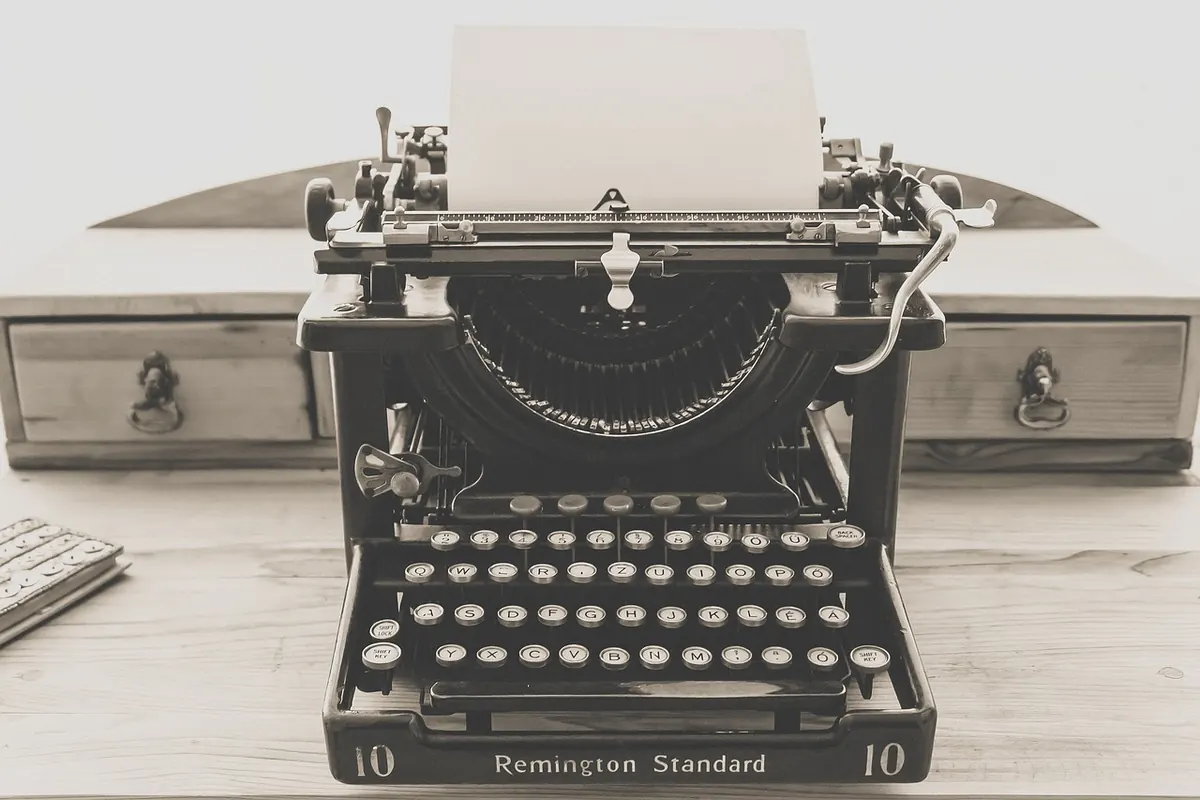
Photo: ha11ok / Pixabay


You Might Also Like
Everyone knows the house edge. Everyone has heard that the roulette wheel has a zero on it and that the slot machines are programmed to pay back a certain…
Ask ten casino players why they play and you'll get ten different answers. The thrill of a jackpot, the mental chess of a poker table, the slow burn of a…